- +00 123 4567
- support@seeds-gallery.shop
over 2000 different plant seeds
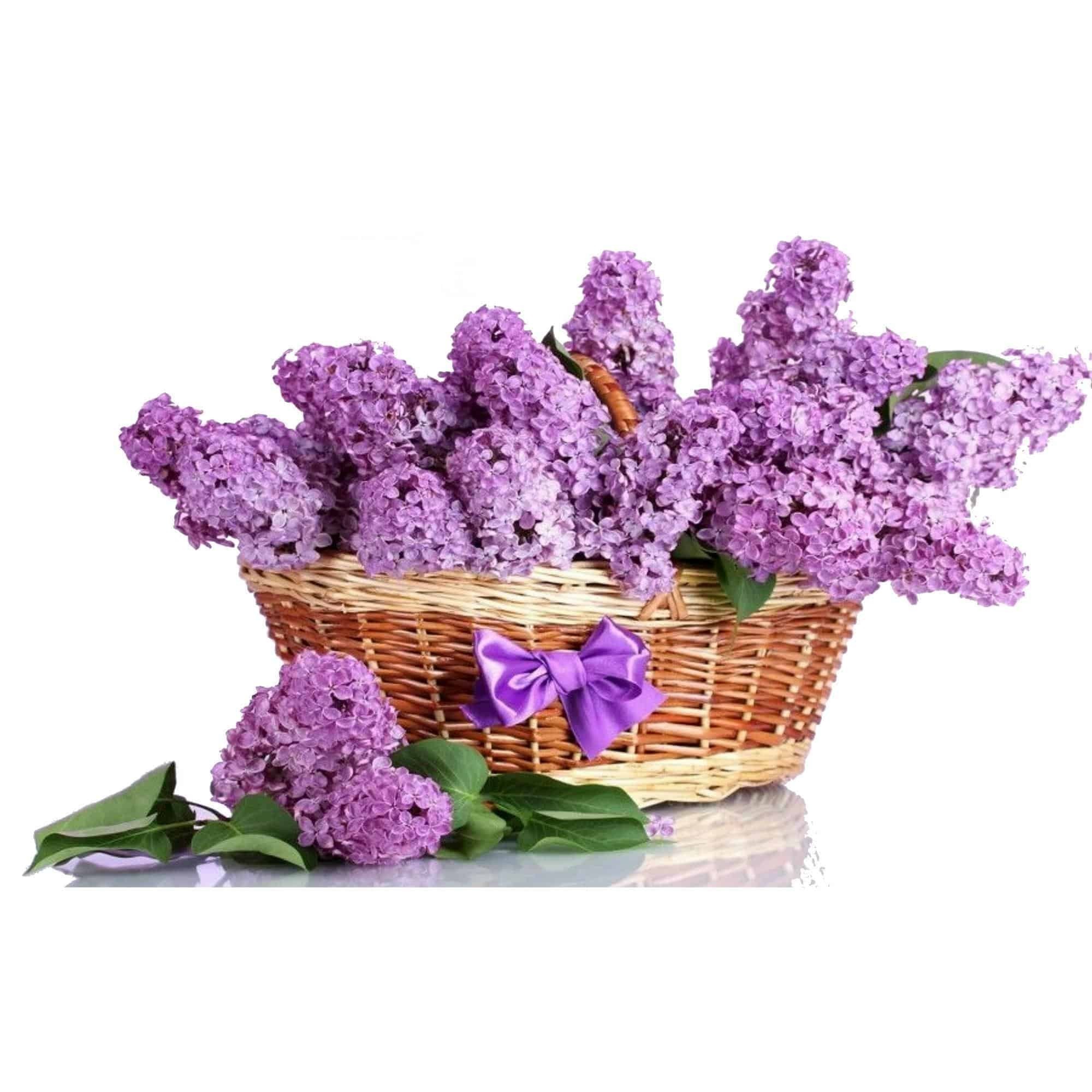


Syringa vulgaris originates from Europe. Great bonsai tree potential. If left to grow naturally, it reaches 8 to 10 feet tall. A small tree that with age develops deeply furrowed bark. This species of Lilac produces
Dear Customers,
We would like to inform you about an important change regarding payment fees. Unfortunately, due to the exceptionally high transaction fees imposed by PayPal, we are forced to apply a surcharge for payments made through their service.
However, we have a solution for you! You can avoid these astronomical fees by choosing one of our alternative payment methods with ZERO COMMISSION:
✅ Credit/Debit Card Payment – 0% Fee ✅ Bank Transfer – 0% Fee
To take advantage of these savings, please complete your purchase directly through our official website: 👉
Thank you for your understanding and for choosing our seeds!
Your Seeds Gallery Team
Syringa vulgaris originates from Europe. Great bonsai tree potential. If left to grow naturally, it reaches 8 to 10 feet tall. A small tree that with age develops deeply furrowed bark. This species of Lilac produces suckers new shoots that sprout from the base of the shrub, or from the roots. Is very tolerant of hard pruning necessary for bonsai cultivation. Green heart-shaped leaves are smooth and appear before the flowers bloom. At Fall, the leaves turn yellow-green. The light purple flowers grow in large clusters, from May to June and have one of the most powerful fragrances emitted by a plant. Hardiness zones 3-7, (-15ºC/5ºF, -37ºC/-35ºF) in Winter. Adptable to a wide range of soils. Lilacs prefer well-drained, slightly alkaline soil and plenty of sunshine for optimum growth and blooming. Although Lilacs love water, they don't enjoy soggy soil. Without proper drainage, Lilacs will do little growing and produce fewer blossoms.
Germination
For faster germination, soak the seeds in slightly hot water for 24-48 hours, followed by one month of cold stratification before sowing at 1/4" deep in sterile gardening soil. Keep damp soil, not soaking wet. Keep pot in warm situation 68-75ºF. Germination usually occurs in 2-4 weeks. It can be a lot more depending on their degree of unbroken dormancy, don't give up.
Scarification / Stratification
This will break their dormancy. It creates a cold and moist environment for the seeds. Mixed in seeds with slightly moistened vermiculite or peat, only damp in a ziplock bag. Close zip bag shut and store it in the salad crisper compartment of your refrigerator. If any seeds begin to sprout during the cold stratification, simply remove the seed and plant.
WIKIPEDIA:
Syringa vulgaris (lilac or common lilac) is a species of flowering plant in the olive family Oleaceae, native to the Balkan Peninsula, where it grows on rocky hills. This species is widely cultivated as an ornamental and has been naturalized in other parts of Europe (UK, France, Germany, Italy, etc.), as well as much of North America. It is not regarded as an aggressive species, found in the wild in widely scattered sites, usually in the vicinity of past or present human habitations.
S. vulgaris is a large deciduous shrub or multistemmed small tree, growing to 6–7 m (20–23 ft) high, producing secondary shoots ("suckers") from the base or roots, with stem diameters up to 20 cm (8 in), which in the course of decades may produce a small clonal thicket.[7] The bark is grey to grey-brown, smooth on young stems, longitudinally furrowed, and flaking on older stems. The leaves are simple, 4–12 cm (2–5 in) and 3–8 cm broad, light green to glaucous, oval to cordate, with pinnate leaf venation, a mucronate apex, and an entire margin. They are arranged in opposite pairs or occasionally in whorls of three. The flowers have a tubular base to the corolla 6–10 mm long with an open four-lobed apex 5–8 mm across, usually lilac to mauve, occasionally white. They are arranged in dense, terminal panicles 8–18 cm (3–7 in) long. The fruit is a dry, smooth, brown capsule, 1–2 cm long, splitting in two to release the two-winged seeds.
Garden history
Lilacs — both S. vulgaris and S. × persica the finer, smaller "Persian lilac", now considered a natural hybrid — were introduced into European gardens at the end of the 16th century, from Ottoman gardens, not through botanists exploring the Balkan habitats of S. vulgaris.[12] The Holy Roman Emperor's ambassador, Ogier Ghiselin de Busbecq, is generally credited with supplying lilac slips to Carolus Clusius, about 1562. Well-connected botanists, such as the great herbalist John Gerard, soon had the rarity in their gardens: Gerard noted that he had lilacs growing “in very great plenty” in 1597, but lilacs were not mentioned by Shakespeare,[13] and John Loudon was of the opinion that the Persian lilac had been introduced into English gardens by John Tradescant the elder.[14] Tradescant's Continental source for information on the lilac, and perhaps ultimately for the plants, was Pietro Andrea Mattioli, as one can tell from a unique copy of Tradescant's plant list in his Lambeth garden, an adjunct of his Musaeum Tradescantianum; it was printed, though probably not published, in 1634: it lists Lilac Matthioli. That Tradescant's "lilac of Mattioli's" was a white one is shown by Elias Ashmole's manuscript list, Trees found in Mrs Tredescants Ground when it came into my possession (1662):[15] "Syringa alba".
In the American colonies, lilacs were introduced in the 18th century. Peter Collinson, F.R.S., wrote to the Pennsylvania gardener and botanist John Bartram, proposing to send him some, and remarked that John Custis of Virginia had a fine "collection", which Ann Leighton interpreted as signifying common and Persian lilacs, in both purple and white, "the entire range of lilacs possible" at the time.
Cultivation
The lilac is a very popular ornamental plant in gardens and parks, because of its attractive, sweet-smelling flowers, which appear in early summer just before many of the roses and other summer flowers come into bloom.
In late summer, lilacs can be attacked by powdery mildew, specifically Erysiphe syringae, one of the Erysiphaceae.[18] No fall color is seen and the seed clusters have no aesthetic appeal.
Common lilac tends to flower profusely in alternate years, a habit that can be improved by deadheading the flower clusters after the color has faded and before seeds, few of which are fertile, form. At the same time, twiggy growth on shoots that have flowered more than once or twice can be cut to a strong, outward-growing side shoot.
It is widely naturalised in western and northern Europe.[8] In a sign of its complete naturalization in North America, it has been selected as the state flower of the state of New Hampshire, because it "is symbolic of that hardy character of the men and women of the Granite State".[19] Additional hardiness, for Canadian gardens, was bred for in a series of S. vulgaris hybrids by Isabella Preston, who introduced many of the later-blooming varieties, whose later-developing flower buds are better protected from late spring frosts; the Syringa x prestoniae hybrids range primarily in the pink and lavender shades


Your review appreciation cannot be sent
Report comment
Report sent
Your report cannot be sent
Write your review
Review sent
Your review cannot be sent
We ship worldwide from the European Union using registered air mail with signature confirmation upon delivery.
📦 Tracking Your Order
Log in to your account and navigate to Order History > Details to find your tracking number.
You will receive email notifications for each stage of your order.
If you don’t see these messages, please check your Spam/Junk folder or contact your email provider. Alternatively, search online for how to unblock sender emails.
OUR EMAIL SERVICE IS WORKING
You will receive email notifications for each stage of your order. If you don’t see these messages, please check your Spam/Junk folder or contact your email provider.
📧 How to Ensure Emails from Our Online Shop Always Land in Your Gmail or any other email provider's Inbox and Aren't Marked as Spam or Blocked:
Add the Sender to your Google or any other email provider's contacts. We can't help you if your settings are not like this. Contact your email provider for help.
Step 1: Open Gmail and find an email from us support@seeds-gallery.shop Do not try to send us an email directly to this address; we will not receive it. Every contact is exclusively through the contact form in our online shop!
If you can’t find our email, it might have been blocked. In that case, proceed with Step 4 below.
Step 2: Hover over the sender’s name or email address at the top of the email.
Step 3: Click the "Add to Contacts" icon (the little person icon).
This will help Gmail recognize us as a trusted sender, ensuring our emails go straight to your inbox and not to spam.
Create a Filter to Prevent Emails from Being Marked as Spam or Blocked
Step 1: Open Gmail and click on the gear icon in the top-right corner, then select "See all settings".
Step 2: Go to the "Filters and Blocked Addresses" tab.
Step 3: Click "Create a new filter".
Step 4: In the "From" field, enter the email address you want to whitelist (e.g., our shop’s email).
Step 5: Click "Create filter".
Step 6: In the next window, check the box labeled "Never send it to Spam".
Step 7: Click "Create filter" to save.
This will ensure our emails always land in your inbox and won’t get marked as spam or blocked by mistake.
Track your package via:
Aftership
17Track
Posta.hr (for tracking numbers like RGxxxxxxHR)
⚠️ Important Notices
Cash on delivery is NOT available.
Always provide a valid mobile number with country code when ordering (e.g., +365 456 7686 576).
Do not order to P.O. Boxes, or if you cannot be home to sign for the package, parcels cannot be left with neighbors.
If a package sent to a P.O. Box is lost or undelivered, no refund will be issued.
⚖️ Customer Responsibility for Legal Compliance
The customer is responsible for ensuring that the product is legal to import into their country, including complying with all import regulations, obtaining necessary permits, and paying applicable customs duties, taxes, and other fees. Please check your local laws before ordering to avoid any issues with customs or delivery.
📦 Lost, Returned & Reshipping Packages
Brazil & Mexico Customers: We cannot refund packages lost or destroyed by customs.
If your package is returned, we will refund only the product cost — shipping costs are non-refundable.
Return postage (€2) and any reshipping costs must be covered by the customer.
If a package is returned to us for any reason, you are responsible for paying the return shipping (€2) plus the cost to resend the package.
🚚 Shipment Delivery
Registered shipments require a signature.
If your tracking shows that the package is still at the origin post office, it is in transit — contact your local post office for updates.
Unfortunately, neither we nor the post office through which your order was sent can help you with the question of where your order is. When you see that your package is in your country, you MUST contact your post office with the tracking number and discuss the matter with them. We send all orders by official state mail.
We are not responsible for delivery times and cannot track shipments on your behalf.
📅 Delivery Options & Estimated Times
| Delivery Option | Processing Time | Notes |
|---|---|---|
| Priority Delivery | Ships in 1–7 business days | Prioritizes order processing (not guaranteed faster delivery); delays possible during holidays (3–10 days) |
| Secured Delivery | Ships in 1–7 business days | Available for orders up to €150; refund if lost |
| Standard Delivery | Ships in 7–10 business days | More economical; delays possible during holidays (7–14 days) |
Estimated Delivery Time:
Within the EU: 3–20 days
Worldwide: 5–30 days
USA Examples: Delivered in 13, 17, 19, 22, or 27 days.
Note: Delivery times depend on your location and local postal system. COVID-19 or holiday seasons may cause additional delays.
💰 Shipping Costs
Shipping and handling fees are calculated automatically at checkout based on the parcel weight and destination.
⏰ Order Processing Hours
We do not process or ship orders on Saturdays or Sundays.
💳 Payment Options
Bank Transfer (SEPA / IBAN / SWIFT-BIC)
Include your order reference in the payment description (e.g., "SGS-19811702").
Orders without payment within 7 days will be automatically cancelled.
PayPal
Payments are accepted in Euros only.
Please select Euros during checkout.
Card Payment
For card payments, visit our partner site: exotic-seeds.store
We accept Visa, MasterCard, American Express, CB, Diners Club, Discover, China UnionPay, JCB, and Discover.
⚠️ Transaction Fees
Customers are responsible for any bank or PayPal transaction fees.
Please ensure accurate payment details for faster order processing.
📢 Final Notes
Before placing your order, always check our website for special notices, holiday schedules, or specific shipping conditions that might affect your purchase.
Important Notice: Digital Invoices
To help reduce paper waste, we do not include a printed invoice with your order. You can easily download and print your invoice at any time by visiting your Order History in your account profile.