Tea Tree Seeds, tea plant, tea shrub (Camellia sinensis)

SKU MHS 3Category Home
Regular price: €6.95
Reduced price: €6.39 Save 8%
Offer ends in:
Tax included

Tea Tree Seeds, tea plant, tea shrub (Camellia sinensis)

Price for Package of 3 seeds.

Camellia sinensis is a species of evergreen shrubs or small trees in the flowering plant family Theaceae whose leaves and leaf buds are used to produce tea. Common names include "tea plant", "tea shrub", and "tea tree" (not to be confused with Melaleuca alternifolia,

Out-of-Stock
Seeds in pack:

Dear Customers,

We would like to inform you about an important change regarding payment fees. Unfortunately, due to the exceptionally high transaction fees imposed by PayPal, we are forced to apply a surcharge for payments made through their service.

However, we have a solution for you! You can avoid these astronomical fees by choosing one of our alternative payment methods with ZERO COMMISSION:

✅ Credit/Debit Card Payment – 0% Fee ✅ Bank Transfer – 0% Fee

To take advantage of these savings, please complete your purchase directly through our official website: 👉 https://exotic-seeds.com/

Thank you for your understanding and for choosing our seeds!

Your Seeds Gallery Team

Share on

Tea Tree Seeds, tea plant, tea shrub (Camellia sinensis)

Price for Package of 3 seeds.

Camellia sinensis is a species of evergreen shrubs or small trees in the flowering plant family Theaceae whose leaves and leaf buds are used to produce tea. Common names include "tea plant", "tea shrub", and "tea tree" (not to be confused with Melaleuca alternifolia, the source of tea tree oil, or Leptospermum scoparium, the New Zealand tea tree).

C. sinensis var. sinensis and C. s. var. assamica are two major varieties grown today.[2] White tea, yellow tea, green tea, oolong, dark tea (which includes pu-erh tea) and black tea are all harvested from one or the other, but are processed differently to attain varying levels of oxidation. Kukicha (twig tea) is also harvested from C. sinensis, but uses twigs and stems rather than leaves.

Nomenclature and taxonomy

The generic name Camellia is taken from the Latinized name of Rev. Georg Kamel,[3] SJ (1661–1706), a Moravian-born Jesuit lay brother, pharmacist, and missionary to the Philippines.

Carl Linnaeus chose his name in 1753 for the genus to honor Kamel's contributions to botany[4] (although Kamel did not discover or name this plant, or any Camellia,[5] and Linnaeus did not consider this plant a Camellia but a Thea).[6]

Robert Sweet shifted all formerly Thea species to the genus Camellia in 1818.[7] The name sinensis means "from China" in Latin.

Four varieties of C. sinensis are recognized.[1] Of these, C. sinensis var. sinensis and C. s. var. assamica (JW Masters) Kitamura are most commonly used for tea, and C. s. var. pubilimba Hung T. Chang and C. s. var. dehungensis (Hung T. Chang & BH Chen) TL Ming are sometimes used locally.[1] The Cambod type tea (C. assamica subsp. lasiocaly) was originally considered a type of assam tea. However, later genetic work showed that it is a hybrid between Chinese small leaf tea and assam type tea.[8]

Tea plants are native to East Asia, and probably originated in the borderlands of north Burma and southwestern China.[9]

  • Chinese (small leaf) tea [C. sinensis var. sinensis]
  • Chinese Western Yunnan Assam (large leaf) tea [C. sinensis var. assamica]
    • Indian Assam (large leaf) tea [C. sinensis var. assamica]
  • Chinese Southern Yunnan Assam (large leaf) tea [C. sinensis var. assamica]

Chinese (small leaf) type tea may have originated in southern China possibly with hybridization of unknown wild tea relatives. However, since no wild populations of this tea are known, the precise location of its origin is speculative.[10][11]

Given their genetic differences forming distinct clades, Chinese Assam type tea (C. s. var. assamica) may have two different parentages – one being found in southern Yunnan (Xishuangbanna, Pu'er City) and the other in western Yunnan (Lincang, Baoshan). Many types of Southern Yunnan Assam tea have been hybridized with the closely related species Camellia taliensis. Unlike Southern Yunnan Assam tea, Western Yunnan Assam tea shares many genetic similarities with Indian Assam type tea (also C. s. var. assamica). Thus, Western Yunnan Assam tea and Indian Assam tea both may have originated from the same parent plant in the area where southwestern China, Indo-Burma, and Tibet meet. However, as the Indian Assam tea shares no haplotypes with Western Yunnan Assam tea, Indian Assam tea is likely to have originated from an independent domestication. Some Indian Assam tea appears to have hybridized with the species Camellia pubicosta.[10][11]

Assuming a generation of 12 years, Chinese small leaf tea is estimated to have diverged from Assam tea around 22,000 years ago, while Chinese Assam tea and Indian Assam tea diverged 2,800 years ago. This divergence tea would correspond to the last glacial maximum.[10][11]

Chinese small leaf type tea was introduced into India in 1836 by the British and some Indian Assam type tea (e.g. Darjeeling tea) appear to be genetic hybrids of Chinese small leaf type tea, native Indian Assam, and possibly also closely related wild tea species.[12]

Cultivars

Hundreds,[13] if not thousands of cultivars of C. sinensis are known. Some Japanese cultivars include:

  • Benifuuki[14]
  • Fushun[15]
  • Kanayamidori[14]
  • Meiryoku[15]
  • Saemidori[15]
  • Okumidori[15]
  • Yabukita[15]

Description

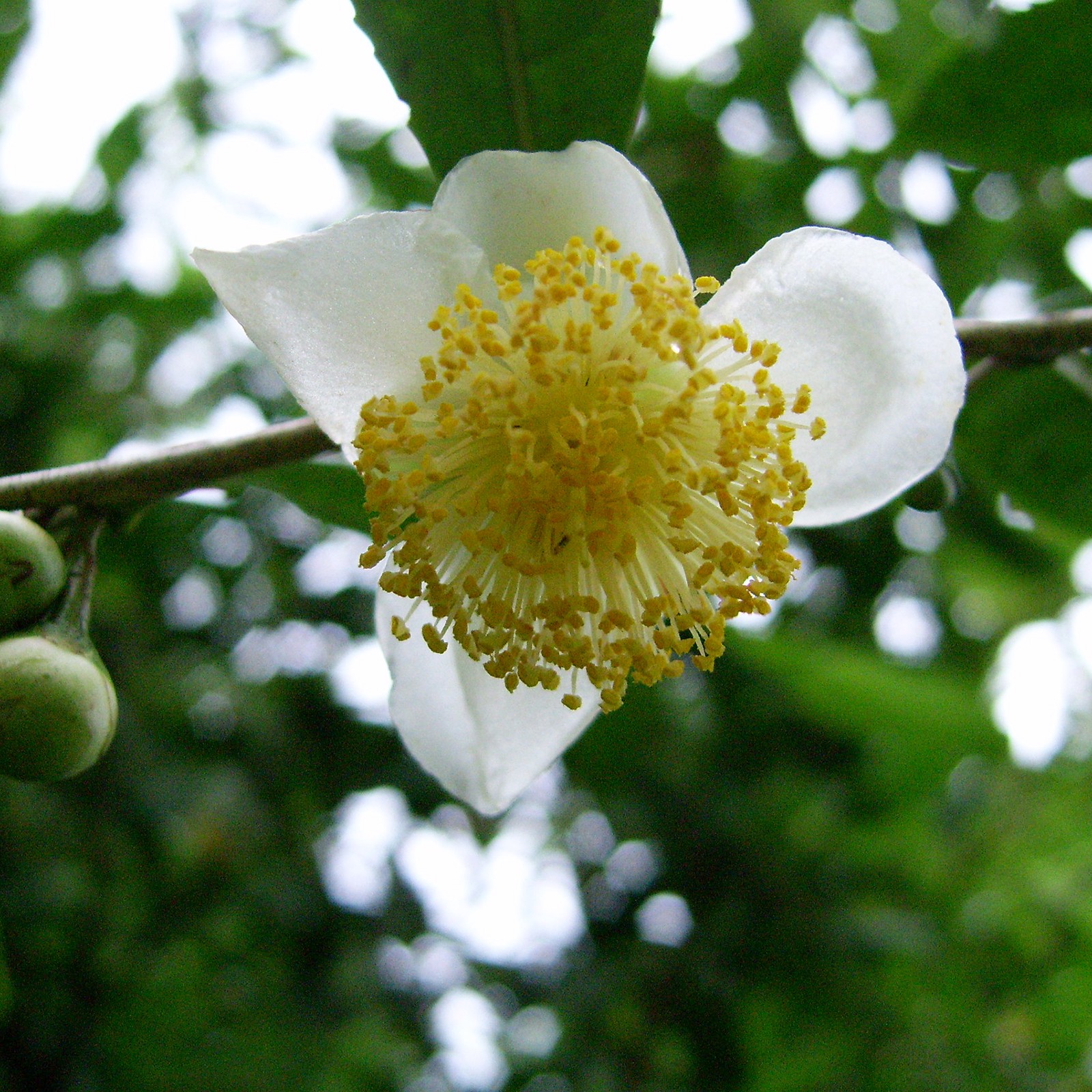
C. sinensis is native to East Asia, the Indian Subcontinent, and Southeast Asia, but it is today cultivated across the world in tropical and subtropical regions. It is an evergreen shrub or small tree that is usually trimmed to below 2 m (6.6 ft) when cultivated for its leaves. It has a strong taproot. The flowers are yellow-white, 2.5–4 cm (0.98–1.57 in) in diameter, with seven or eight petals.

Tea Tree Seeds, tea plant, tea shrub (Camellia sinensis)
Flower of tea plant

The seeds of C. sinensis and C. oleifera can be pressed to yield tea oil, a sweetish seasoning and cooking oil that should not be confused with tea tree oil, an essential oil that is used for medical and cosmetic purposes, and originates from the leaves of a different plant.
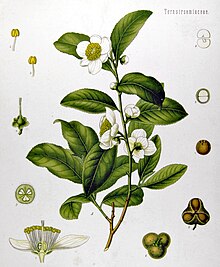
Tea Tree Seeds, tea plant, tea shrub (Camellia sinensis)
C. sinensis plant, with cross-section of the flower (lower left) and seeds (lower right)
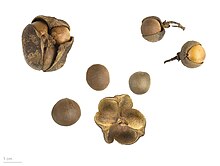
Tea Tree Seeds, tea plant, tea shrub (Camellia sinensis)
C. sinensis - MHNT

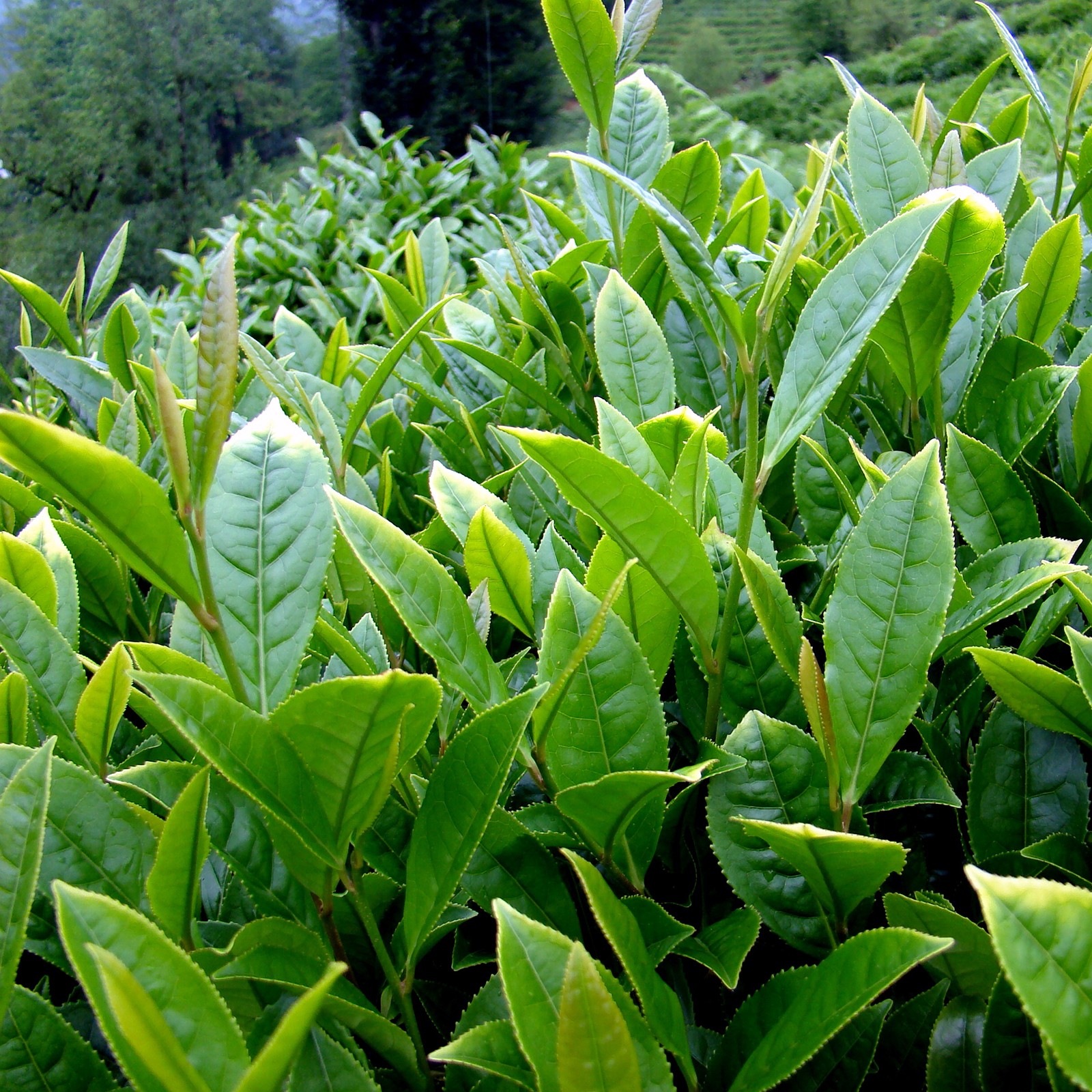
The leaves are 4–15 cm (1.6–5.9 in) long and 2–5 cm (0.79–1.97 in) broad. Fresh leaves contain about 4% caffeine, as well as related compounds including theobromine.[16] The young, light-green leaves are preferably harvested for tea production; they have short, white hairs on the underside. Older leaves are deeper green. Different leaf ages produce differing tea qualities, since their chemical compositions are different. Usually, the tip (bud) and the first two to three leaves are harvested for processing. This hand picking is repeated every one to two weeks.

In 2017, Chinese scientists sequenced the genome of C. s. var. assamica . It contains about three billion base pairs, which was larger than most plants previously sequenced.

Cultivation

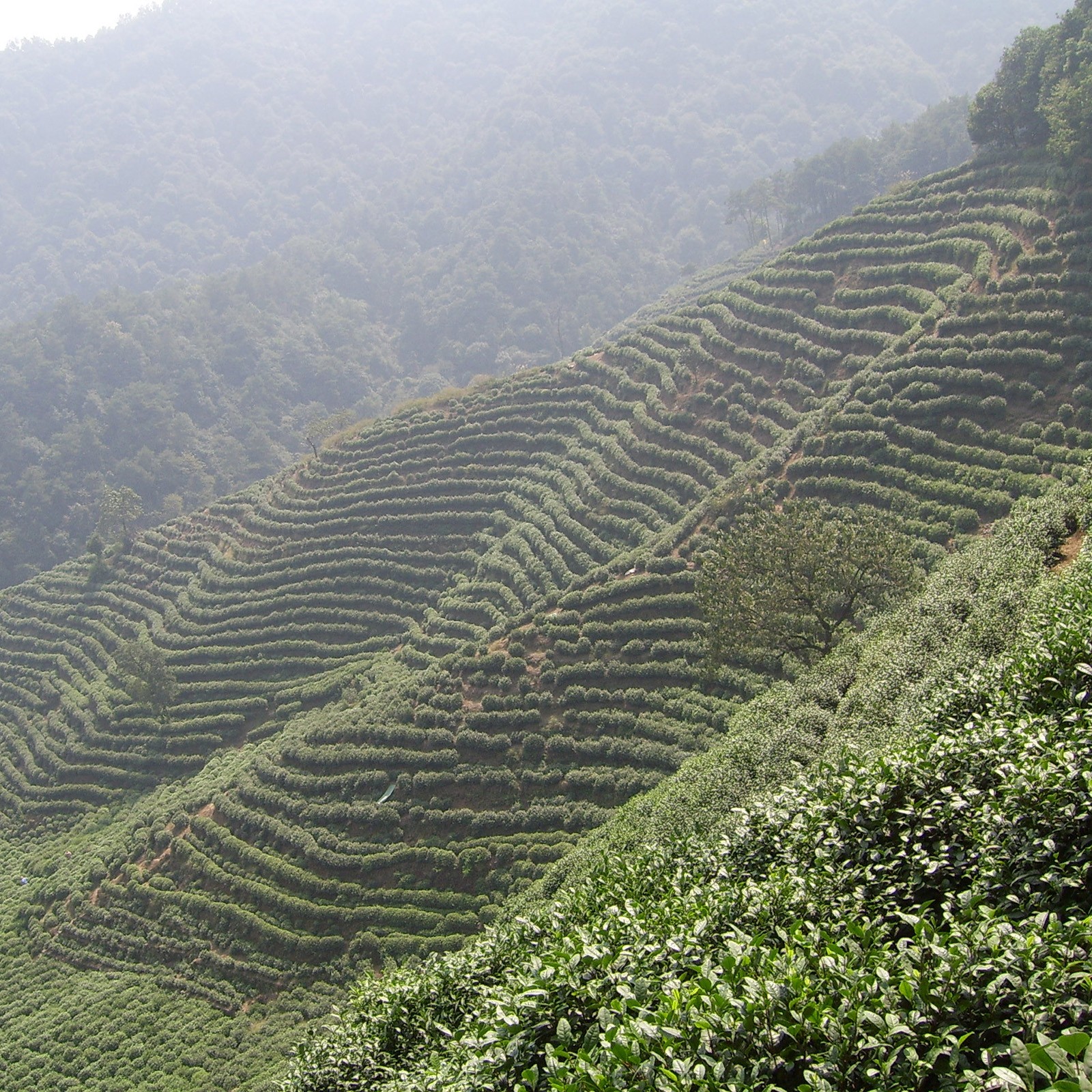
C. sinensis is mainly cultivated in tropical and subtropical climates, in areas with at least 127 cm (50 in) of rainfall a year. Tea plants prefer a rich and moist growing location in full to part sun and can be grown in hardiness zones 7 – 9. However, the clonal one is commercially cultivated from the equator to as far north as Cornwall and Scotland on the UK mainland.[19][20] Many high-quality teas are grown at high elevations, up to 1,500 m (4,900 ft), as the plants grow more slowly and acquire more flavor.

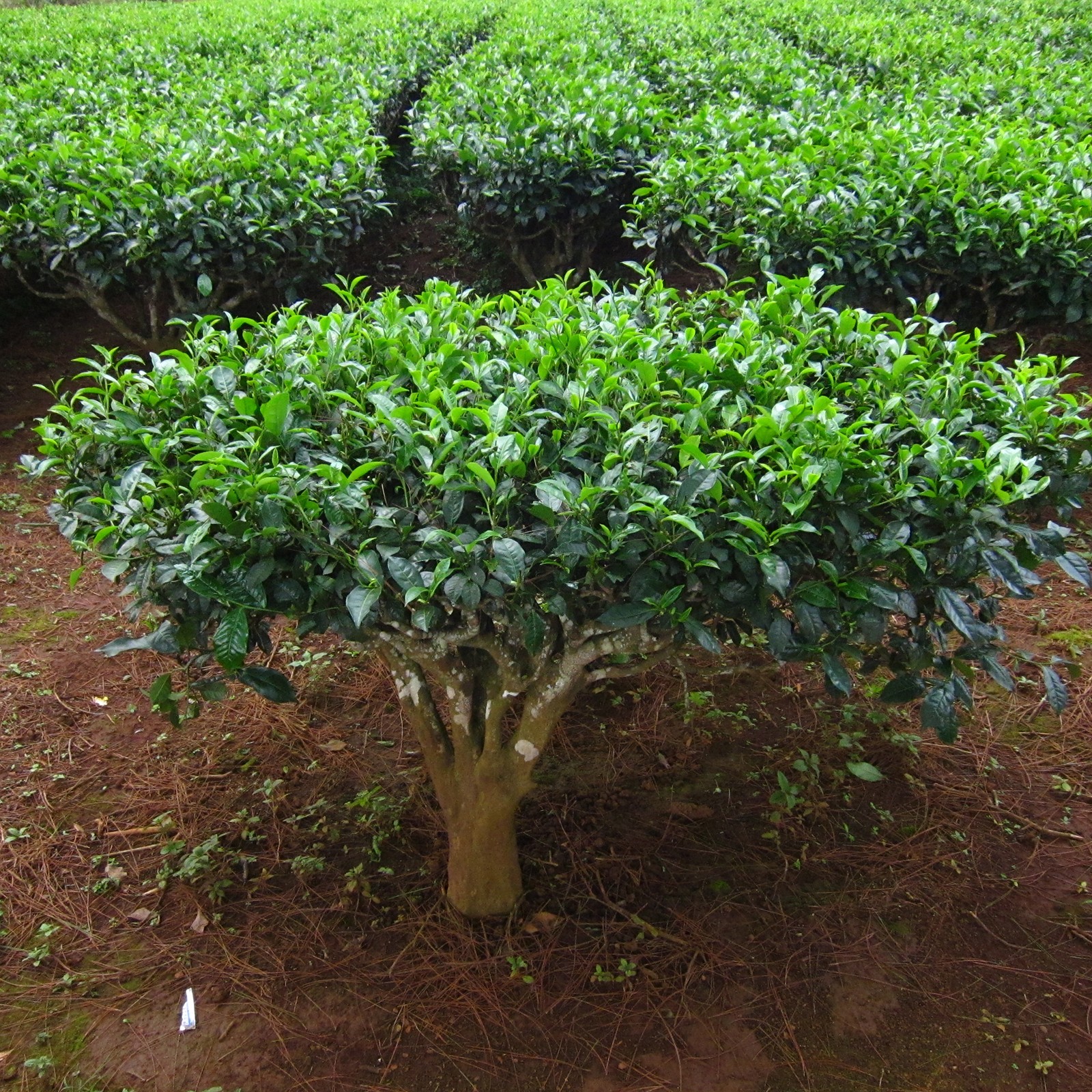
Tea plants will grow into a tree if left undisturbed, but cultivated plants are pruned to waist height for ease of plucking. Two principal varieties are used, the small-leaved Chinese variety plant (C. s. sinensis) and the large-leaved Assamese plant (C. s. assamica), used mainly for black tea.

Chinese teas

The Chinese plant is a small-leafed bush with multiple stems that reaches a height of some 3 m. It is native to southeast China. The first tea plant variety to be discovered, recorded, and used to produce tea dates back 3,000 years ago, it yields some of the most popular teas.

C. s. var. waldenae was considered a different species, C. waldenae by SY Hu,[21] but it was later identified as a variety of C. sinensis.[22] This variety is commonly called Waldenae Camellia. It is seen on Sunset Peak and Tai Mo Shan in Hong Kong. It is also distributed in Guangxi province, China.[21]

Indian and Nepali teas

Three main kinds of tea are produced in India:

  • Assam comes from the heavily forested northeastern section of the country, Assam. Tea from here is rich and full-bodied. In Assam, the first tea estate of India was established, in 1837.
  • Darjeeling is from the cool and wet Darjeeling region, tucked in the foothills of the Himalayas. Tea plantations reach 2,200 meters. The tea is delicately flavored and considered to be one of the finest teas in the world. The Darjeeling plantations have three distinct harvests, termed 'flushes', and the tea produced from each flush has a unique flavor. First (spring) flush teas are light and aromatic, while the second (summer) flush produces tea with a bit more bite. The third, or autumn flush gives a tea that is lesser in quality.

Nepali tea is also considered to be similar to the tea produced in Darjeeling, mostly because the eastern part of Nepal, where a large amount of tea is produced, has similar topography to that of Darjeeling.

  • Nilgiri is from a southern region of India almost as high as Darjeeling. Grown at elevations between 1,000 and 2,500 m, Nilgiri teas are subtle and rather gentle and are frequently blended with other, more robust teas.[citation needed]
Tea Tree Seeds, tea plant, tea shrub (Camellia sinensis)
Seed-bearing fruit of C. sinensis

Pests and diseases

Tea leaves are eaten by some herbivores, such as the caterpillars of the willow beauty (Peribatodes rhomboidaria), a geometer moth.

Health effects

Although health benefits have been assumed throughout the history of using tea as a common beverage, no high-quality evidence shows that tea confers significant benefits.[23][24] In clinical research over the early 21st century, tea has been studied extensively for its potential to lower the risk of human diseases, but none of this research is conclusive as of 2017.

Biosynthesis of caffeine

Caffeine, a molecule produced in C. sinensis, functions as a secondary metabolite. Caffeine is a purine alkaloid and its biosynthesis occurs in young tea leaves and is regulated by several enzymes.[25][26] The biosynthetic pathway in C. sinensis differs from other caffeine-producing plants such as coffee or guayusa. Analysis of the pathway was carried out by harvesting young leaves and using reverse transcription PCR to analyze the genes encoding the major enzymes involved in synthesizing caffeine. The gene TCS1 encodes caffeine synthase. Younger leaves feature high concentrations of TCS1 transcripts, allowing more caffeine to be synthesized during this time. Dephosphorylation of xanthosine-5'-monophosphate into xanthosine is the committed step for the xanthosines entering the beginning of the most common pathway. A sequence of reactions turns xanthosine into 7-methylxanthosine, then 7-methylxanthine, then theobromine, and finally into caffeine.

Tea Germination from Seed

Category Home
Tea Tree Seeds, tea plant, tea shrub (Camellia sinensis)
Comments (0)
No customer reviews for the moment.

🌍 Worldwide Shipping from the EU

We ship worldwide from the European Union using registered air mail with signature confirmation upon delivery.

📦 Tracking Your Order
Log in to your account and navigate to Order History > Details to find your tracking number.

You will receive email notifications for each stage of your order.
If you don’t see these messages, please check your Spam/Junk folder or contact your email provider. Alternatively, search online for how to unblock sender emails.

OUR EMAIL SERVICE IS WORKING

  • You will receive email notifications for each stage of your order. If you don’t see these messages, please check your Spam/Junk folder or contact your email provider.


📧 How to Ensure Emails from Our Online Shop Always Land in Your Gmail or any other email provider's Inbox and Aren't Marked as Spam or Blocked:

  1. Add the Sender to your Google or any other email provider's contacts. We can't help you if your settings are not like this. Contact your email provider for help.

    • Step 1: Open Gmail and find an email from us support@seeds-gallery.shop Do not try to send us an email directly to this address; we will not receive it. Every contact is exclusively through the contact form in our online shop!
      If you can’t find our email, it might have been blocked. In that case, proceed with Step 4 below.

    • Step 2: Hover over the sender’s name or email address at the top of the email.

    • Step 3: Click the "Add to Contacts" icon (the little person icon).

    This will help Gmail recognize us as a trusted sender, ensuring our emails go straight to your inbox and not to spam.

  2. Create a Filter to Prevent Emails from Being Marked as Spam or Blocked

    • Step 1: Open Gmail and click on the gear icon in the top-right corner, then select "See all settings".

    • Step 2: Go to the "Filters and Blocked Addresses" tab.

    • Step 3: Click "Create a new filter".

    • Step 4: In the "From" field, enter the email address you want to whitelist (e.g., our shop’s email).

    • Step 5: Click "Create filter".

    • Step 6: In the next window, check the box labeled "Never send it to Spam".

    • Step 7: Click "Create filter" to save.

    This will ensure our emails always land in your inbox and won’t get marked as spam or blocked by mistake.

Track your package via:

  • Aftership

  • 17Track

  • Posta.hr (for tracking numbers like RGxxxxxxHR)

⚠️ Important Notices

  • Cash on delivery is NOT available.

  • Always provide a valid mobile number with country code when ordering (e.g., +365 456 7686 576).

  • Do not order to P.O. Boxes, or if you cannot be home to sign for the package, parcels cannot be left with neighbors.

  • If a package sent to a P.O. Box is lost or undelivered, no refund will be issued.

⚖️ Customer Responsibility for Legal Compliance
The customer is responsible for ensuring that the product is legal to import into their country, including complying with all import regulations, obtaining necessary permits, and paying applicable customs duties, taxes, and other fees. Please check your local laws before ordering to avoid any issues with customs or delivery.

📦 Lost, Returned & Reshipping Packages

  • Brazil & Mexico Customers: We cannot refund packages lost or destroyed by customs.

  • If your package is returned, we will refund only the product cost — shipping costs are non-refundable.

  • Return postage (€2) and any reshipping costs must be covered by the customer.

  • If a package is returned to us for any reason, you are responsible for paying the return shipping (€2) plus the cost to resend the package.

🚚 Shipment Delivery
Registered shipments require a signature.

If your tracking shows that the package is still at the origin post office, it is in transit — contact your local post office for updates.

Unfortunately, neither we nor the post office through which your order was sent can help you with the question of where your order is. When you see that your package is in your country, you MUST contact your post office with the tracking number and discuss the matter with them. We send all orders by official state mail.

We are not responsible for delivery times and cannot track shipments on your behalf.

📅 Delivery Options & Estimated Times

Delivery OptionProcessing TimeNotes
Priority DeliveryShips in 1–7 business daysPrioritizes order processing (not guaranteed faster delivery); delays possible during holidays (3–10 days)
Secured DeliveryShips in 1–7 business daysAvailable for orders up to €150; refund if lost
Standard DeliveryShips in 7–10 business daysMore economical; delays possible during holidays (7–14 days)

Estimated Delivery Time:

  • Within the EU: 3–20 days

  • Worldwide: 5–30 days

  • USA Examples: Delivered in 13, 17, 19, 22, or 27 days.

  • Note: Delivery times depend on your location and local postal system. COVID-19 or holiday seasons may cause additional delays.

💰 Shipping Costs
Shipping and handling fees are calculated automatically at checkout based on the parcel weight and destination.

⏰ Order Processing Hours
We do not process or ship orders on Saturdays or Sundays.

💳 Payment Options

  • Bank Transfer (SEPA / IBAN / SWIFT-BIC)
    Include your order reference in the payment description (e.g., "SGS-19811702").
    Orders without payment within 7 days will be automatically cancelled.

  • PayPal
    Payments are accepted in Euros only.
    Please select Euros during checkout.

  • Card Payment
    For card payments, visit our partner site: exotic-seeds.store
    We accept Visa, MasterCard, American Express, CB, Diners Club, Discover, China UnionPay, JCB, and Discover.

⚠️ Transaction Fees
Customers are responsible for any bank or PayPal transaction fees.
Please ensure accurate payment details for faster order processing.

📢 Final Notes
Before placing your order, always check our website for special notices, holiday schedules, or specific shipping conditions that might affect your purchase.

Important Notice: Digital Invoices

To help reduce paper waste, we do not include a printed invoice with your order. You can easily download and print your invoice at any time by visiting your Order History in your account profile.

Related Products