- +00 123 4567
- support@seeds-gallery.shop
over 2000 different plant seeds


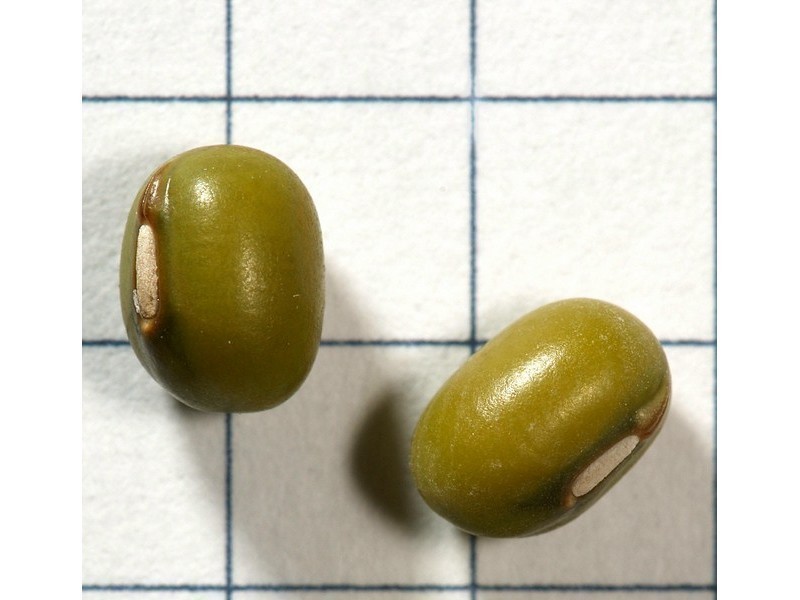
The mung bean (Vigna radiata), alternatively known as the moong bean, green gram, Lentil, but not Mungo, is a plant species in the legume family. Native to the Indian subcontinent, the mung bean is mainly cultivated today in India, China, and
Beste klanten,
Wij willen u informeren over een belangrijke wijziging met betrekking tot de betalingskosten. Helaas zijn wij, vanwege de extreem hoge transactiekosten die door PayPal worden opgelegd, genoodzaakt een toeslag te rekenen voor betalingen via deze service.
Gelukkig hebben wij een oplossing voor u! U kunt deze astronomische kosten vermijden door te kiezen voor een van onze alternatieve betaalmethoden ZONDER COMMISSIE:
✅ Betaling per bankkaart (Creditcard/Debetkaart) – 0% commissie ✅ Bankoverschrijving – 0% commissie
Om van deze besparing te profiteren, verzoeken wij u om uw aankoop rechtstreeks via onze officiële website te voltooien: 👉
Bedankt voor uw begrip en voor het kiezen van onze zaden!
Het Seeds Gallery-team
The mung bean (Vigna radiata), alternatively known as the moong bean, green gram, Lentil, but not Mungo, is a plant species in the legume family. Native to the Indian subcontinent, the mung bean is mainly cultivated today in India, China, and Southeast Asia. It is also cultivated in hot, dry regions in Southern Europe and the Southern United States. It is used as an ingredient in both savory and sweet dishes.
Description
The English word mung is derived from the Hindi word मूंग Moong derived from the Sanskrit word मुद्ग (mudga). In Tamil it is பாசி பருப்பு (paasi paruppu). In Telugu language it is called పెసర పప్పు (Pesara pappu). In Kannada, it is ಹೆಸರು ಬೇಳೆ (hesaru bele).
Taxonomy
They are one of many species recently moved from the genus Phaseolus to Vigna, and is still often seen incorrectly cited as Phaseolus aureus or Phaseolus radiatus.
Uses
Mung beans are commonly used in various cuisines across Asia.
Whole beans and mung bean paste
Whole cooked mung beans are generally prepared from dried beans by boiling until they are soft. Mung beans are light yellow in color when their skins are removed. Mung bean paste can be made by dehulling, cooking, and pulverizing the beans to a dry paste.
Although whole mung beans are also occasionally used in Indian cuisine, beans without skins are more commonly used; but in Kerala, whole mung beans are commonly boiled to make a dry preparation often served with rice gruel (kanji). Dehulled mung beans can also be used in a similar fashion as whole beans for the purpose of making sweet soups. Mung beans in some regional cuisines of India are stripped of their outer coats to make mung dal. In Tamil Nadu, Telangana and Andhra Pradesh, steamed whole beans are seasoned with spices and fresh grated coconut in a preparation called sundal. In south and north Indian states, mung beans are also eaten as pancakes. They are soaked in water for six to 12 hours (the higher the temperature, the lesser soaking time). Then they are ground into fine paste along with ginger and salt. Then pancakes are made on a very hot griddle. These are usually eaten for breakfast. This provides high quality protein that is rare in most Indian regional cuisines. Pongal or kichdi is another recipe that is made with rice and mung beans without skin. In Kerala, it is commonly used to make the parippu preparation in the Travancore region (unlike Cochin and Malabar, where toor dal, tuvara parippu, is used). It is also used, with coconut milk and jaggery, to make a type of payasam.
In Chinese cuisine, whole mung beans are used to make a tángshuǐ, or dessert, otherwise literally translated, "sugar water", called lǜdòu tángshuǐ, which is served either warm or chilled. In Indonesia, they are made into a popular dessert snack called es kacang hijau, which has the consistency of a porridge. The beans are cooked with sugar, coconut milk, and a little ginger.
In Hong Kong, dehulled mung beans and mung bean paste are made into ice cream or frozen ice pops. Mung bean paste is used as a common filling for Chinese mooncakes in East China and Taiwan. Also in China, the boiled and shelled beans are used as filling in glutinous rice dumplings eaten during the dragon boat festival (端午节).[4] The beans may also cooked until soft, blended into a liquid, sweetened, and served as a beverage, popular in many parts of China.
In the Philippines, ginisáng monggó (sautéed mung bean stew), also known as monggó guisado or balatong, is a savoury stew of whole mung beans with shrimp or fish. It is traditionally served on Fridays of Lent, when the majority Roman Catholic Filipinos traditionally abstain from meat. Variants of ginisáng monggó may also be made with chicken or pork.
Mung bean paste is also a common filling of pastries known as hopia (or bakpia) popular in Indonesia, the Philippines and further afield in Guyana (where it is known as black eye cake) and originating from southern China
Bean sprouts
Mung bean sprouts are germinated by leaving them in water for four hours of daytime light and spending the rest of the day in the dark. Mung bean sprouts can be grown under artificial light for four hours over the period of a week. They are usually simply called "bean sprouts". However, when bean sprouts are called for in recipes, it generally refers to mung bean or soybean sprouts.
Mung bean sprouts are stir-fried as a Chinese vegetable accompaniment to a meal, usually with garlic, ginger, spring onions, or pieces of salted dried fish to add flavour. Uncooked bean sprouts are used in filling for Vietnamese spring rolls, as well as a garnish for phở. They are a major ingredient in a variety of Malaysian and Peranakan cuisine, including char kway teow, hokkien mee, mee rebus, and pasembor. In Korea, slightly cooked mung bean sprouts, called sukjunamul (hangul: 숙주나물), are often served as a side dish. They are blanched (placed into boiling water for less than a minute), immediately cooled in cold water, and mixed with sesame oil, garlic, salt, and often other ingredients. In the Philippines, mung bean sprouts are made into lumpia rolls called lumpiang togue.
In northern China and Korea, soybean sprouts, called kongnamul (hangul: 콩나물) in Korean, are more widely used in a variety of dishes.
Starch
Mung bean starch, which is extracted from ground mung beans, is used to make transparent cellophane noodles (also known as bean thread noodles, bean threads, glass noodles, fensi (粉絲), tung hoon (冬粉), miến, bún tàu, or bún tào). Cellophane noodles become soft and slippery when they are soaked in hot water. A variation of cellophane noodles, called mung bean sheets or green bean sheets, are also available. In Korea, a jelly called nokdumuk (hangul: 녹두묵; also called cheongpomuk; hangul: 청포묵) is made from mung bean starch; a similar jelly, colored yellow with the addition of gardenia coloring, is called hwangpomuk (hangul: 황포묵). In northern China, mung bean jelly is called liangfen (凉粉, meaning chilled bean jelly), which is very popular food during summer. Jidou liangfen is another flavor of mung bean jelly food in Yunnan, in southern China.
Mung batter is used to make crepes named pesarattu in Andhra Pradesh, India and pancakes named Bindaetteok in Korea.
History of domestication and cultivation
The mung bean was domesticated in India, where its progenitor (Vigna radiata subspecies sublobata) occurs wild.[8][9] Archaeological evidence has turned up carbonized mung beans on many sites in India. Areas with early finds include the eastern zone of the Harappan civilization in Punjab and Haryana, where finds date back about 4500 years, and South India in the modern state of Karnataka where finds date back more than 4000 years. Some scholars therefore infer two separate domestications in the northwest and south of India. In South India there is evidence for evolution of larger-seeded mung beans 3500 to 3000 years ago. By about 3500 years ago mung beans were widely cultivated throughout India. Cultivated mung beans later spread from India to China and Southeast Asia. Archaeobotanical research at the site of Khao Sam Kaeo in southern Thailand indicates that mung beans had arrived in Thailand by at least 2200 years ago. Finds on Pemba Island indicate that during the era of Swahili trade, in the 9th or 10th century, mung beans also came to be cultivated in Africa.


Uw beoordelingswaardering kan niet worden verzonden
Rapporteer reactie
Melding verzonden
Uw opmerking kan niet worden verzonden
Schrijf uw recensie
Beoordeling verstuurd
Uw beoordeling kan niet worden verzonden
🌍 Wereldwijde verzending vanuit de EU
Wij verzenden wereldwijd vanuit de Europese Unie via aangetekende luchtpost met handtekening voor ontvangst bij levering.
📦 Uw bestelling volgen
Om uw trackingnummer te vinden, logt u in op uw account en gaat u naar: Bestelgeschiedenis > Details. Uw trackingnummer bevindt zich direct in de bestelgegevens.
U ontvangt e-mailmeldingen voor elke fase van uw bestelling.
Als u deze berichten niet ziet, controleer dan uw map Spam/Ongewenste e-mail of neem contact op met uw e-mailprovider. Zoek anders online naar hoe u e-mails van afzenders kunt deblokkeren.
ONZE E-MAILSERVICE WERKT — Als u geen e-mails ontvangt, ligt dit waarschijnlijk aan uw e-mailprovider of instellingen.
📧 Hoe u ervoor zorgt dat e-mails van onze webshop altijd in uw inbox terechtkomen
Om te voorkomen dat onze e-mails als spam worden gemarkeerd, voegt u ons e-mailadres toe aan uw contacten:
Open Gmail (of een andere provider) en zoek een e-mail van ons (support@seeds-gallery.shop).
Beweeg de muis over de naam of het e-mailadres van de afzender.
Klik op het icoon "Toevoegen aan contacten" (het poppetje).
We kunnen u niet helpen als uw instellingen niet zo staan. Neem contact op met uw e-mailprovider voor hulp.
Als alternatief kunt u een filter maken in Gmail:
Open Gmail en ga naar Instellingen > Alle instellingen bekijken.
Ga naar het tabblad Filters en geblokkeerde adressen.
Klik op Nieuw filter maken en voer ons e-mailadres in.
Vink Nooit naar Spam verzenden aan en klik op Filter maken.
📍 Uw pakket volgen
Uw trackingnummer staat in uw bestelgegevens. U kunt uw bestelling volgen via de volgende platforms:
⚠️ Belangrijke mededelingen
Betaling onder rembours is NIET mogelijk.
Geef bij het bestellen altijd een geldig mobiel nummer op met landnummer (bijv. +31 6 1234 5678).
Bestel NIET naar postbussen (P.O. Boxes) of als u niet thuis kunt zijn om voor het pakket te tekenen. Pakketten kunnen niet bij de buren worden afgegeven.
Als een pakket dat naar een postbus is verzonden verloren gaat of niet wordt bezorgd, vindt er geen terugbetaling plaats.
⚖️ Verantwoordelijkheid van de klant voor wettelijke naleving
De klant is verantwoordelijk om ervoor te zorgen dat het product legaal in zijn land mag worden geïmporteerd, inclusief naleving van alle importvoorschriften, het verkrijgen van de nodige vergunningen en de betaling van toepasselijke douanerechten, belastingen en andere kosten. Controleer uw lokale wetgeving voordat u bestelt.
🔄 Verloren, geretourneerde en opnieuw verzonden pakketten
Klanten uit Brazilië en Mexico: We kunnen geen pakketten terugbetalen die door de douane zijn verloren of vernietigd.
Als uw pakket wordt geretourneerd, betalen we alleen de productkosten terug — verzendkosten worden niet gerestitueerd.
Retourkosten (€2) en eventuele kosten voor opnieuw verzenden zijn voor rekening van de klant.
🚚 Levering van de zending
Aangetekende zendingen vereisen een handtekening.
Als de tracking aangeeft dat het pakket nog op het postkantoor van herkomst is, is het onderweg — neem contact op met uw lokale postkantoor voor updates.
Helaas kunnen wij, noch het postkantoor waardoor uw bestelling is verzonden, u helpen met de vraag waar uw bestelling zich precies bevindt. Wanneer u ziet dat het pakket in uw land is, MOET u contact opnemen met uw postkantoor met het trackingnummer.
⏱️ Leveringsopties & geschatte tijden
| Leveringsoptie | Verwerkingstijd | Opmerkingen |
| Priority Delivery | Verzonden binnen 1–7 werkdagen | Prioriteit bij orderverwerking; vertragingen mogelijk tijdens feestdagen (3–10 dagen) |
| Secured Delivery | Verzonden binnen 1–7 werkdagen | Beschikbaar voor bestellingen tot €150; terugbetaling bij verlies |
| Standard Delivery | Verzonden binnen 7–10 werkdagen | Voordeliger; vertragingen mogelijk tijdens feestdagen (7–14 dagen) |
Geschatte levertijden:
Binnen de EU: 3–20 dagen
Wereldwijd: 5–30 dagen
Opmerking: Levertijden zijn afhankelijk van uw locatie en het lokale postsysteem. COVID-19 of feestdagen kunnen extra vertraging veroorzaken.
💰 Verzendkosten
Verzend- en administratiekosten worden automatisch berekend bij het afrekenen op basis van het gewicht van het pakket en de bestemming.
⏰ Verwerkingstijden
Wij verwerken of verzenden geen bestellingen op zaterdag of zondag.
💳 Betalingsmogelijkheden
Wij willen u informeren over een belangrijke wijziging met betrekking tot de betalingskosten. Helaas zijn wij, vanwege de uitzonderlijk hoge transactiekosten die PayPal in rekening brengt, genoodzaakt een toeslag toe te passen voor betalingen die via hun service worden gedaan.
We hebben echter een oplossing voor u! U kunt deze astronomische kosten vermijden door te kiezen voor een van onze alternatieve betaalmethoden met NUL COMMISSIE:
✅ Creditcard/Betaalpas betaling – 0% Kosten
✅ Bankoverschrijving – 0% Kosten
Bankoverschrijving (SEPA / IBAN / SWIFT-BIC): Vermeld uw bestelreferentie in de betalingsomschrijving. Bestellingen zonder betaling binnen 4 dagen worden automatisch geannuleerd.
PayPal: Betalingen worden alleen in Euro geaccepteerd. Selecteer Euro tijdens het afrekenen.
Kaartbetaling: Ga voor kaartbetalingen naar onze partnerwebsite:
Wij accepteren Visa, MasterCard, American Express, CB, Diners Club, Discover, China UnionPay, JCB en Discover.
⚠️ Transactiekosten
Klanten zijn verantwoordelijk voor eventuele bank- of PayPal-transactiekosten.
📝 Slotopmerkingen
Controleer voor het plaatsen van uw bestelling altijd onze website voor speciale mededelingen, vakantieschema's of specifieke verzendvoorwaarden.
check_circle
check_circle