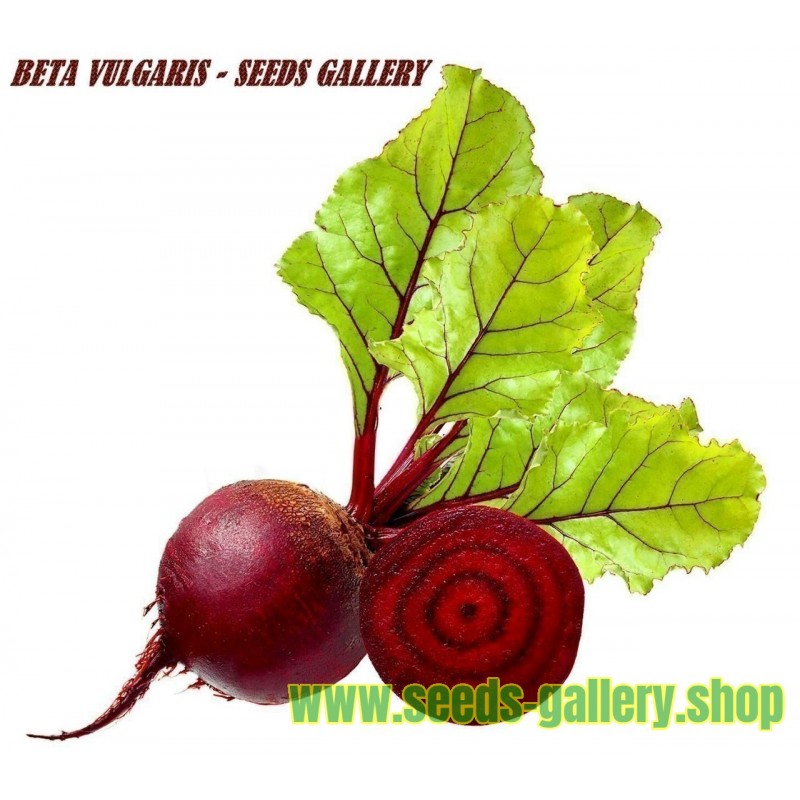
Beetroot Seeds 'Monika' (Beta vulgaris)
Price for Package of 100 seeds.
A splendid variety with so many advantages. Virtually no thinning is required, being a monogerm type, and it is also highly bolt-resistant. Perfect for both early and later sowings, we love the baby beets pickled in sweet vinegar.
How to grow Beetroot:
Beetroot are remarkably easy to grow and can be grown across a wide range of climates. It prefers moist, sunny conditions with not excessive heat. It is sown as a warm season crop in most regions, but performs best during the cooler, drier months in tropical zones where it may prefer some shade in summer conditions
Beetroot can be sown from very early in the season until late and can be grown in raised beds or containers all year round. Sow the seeds closer together for cutting and use in baby leaf salads, they can be constantly thinned, as you need them throughout the growing period. The young shoots are also deliciously sweet.
Beetroot seeds are clustered together with each cork-like fruit containing two or three seeds. Once germinated, they require thinning out early to avoid root disturbance. (Some varieties have been bred to only produce one seed and are called 'Monogerm' seeds).
Position:
Beetroot prefer to be grown in light, sandy soil in a sunny position, but can tolerate pretty much any sort of soil and some shade will be tolerated, a pH of 6.0-7.0 is fine but if you know your soil is too acid dig in some lime.
Dig over the site with a spade (preferably in the autumn prior to sowing). Remove perennial weeds and large stones as these can cause the roots to become mis-shapen
Level roughly and then work over the area with a rake to leave a fine finish. If you can, two or three weeks before sowing, spread a general granular fertiliser across the site and rake into the soil. Do not add manure to the soil as this will cause the roots to develop incorrectly.
When to sow Beetroot: Late spring to autumn.
Beetroots can be grown from early spring onwards if grown indoors or undercover.
Seeds can be planted directly into the ground after the threat of frost has passed. Beetroots are best planted at soil temperatures between 7°C and 25°C. The best quality beetroots are grown at temperatures of 10 to 18°C (50 to 65°F).The crops will tolerate light frost.
How to sow Beetroot:
The seeds require plenty of moisture to germinate. Soaking them in warm water for an hour or two prior to planting is a great way to speed up germination. Expected germination time 10 to 14 days.
Prevent a glut when planting beetroot by sowing your seed in stages, a small batch at a time every couple of weeks will give a continuous harvest.
Sowing Indoors: From February
Sow 2 or 3 seeds per pot, at a depth of 25mm (1in). When the seedlings emerge there may be more than one from each seed cluster. When they are about 5cm (2in) tall, carefully separate these into individual plants prior to planting out (only transplant the strongest seedlings). This will avoid seedlings competing with one another and prevent a distorted, misshapen harvest.
Successful transplanting can be carried out as soon as plants have formed their first true leaves. Unlike other root crops, beetroot seedlings transplant reasonably well providing they are not too large and are kept moist when transplanting.
Sowing Direct: From May
It is best to sow beetroot seeds directly into the ground when the temperature of the soil has warmed to about 7°C (44°F). Sow thinly in prepared seed beds. Where plants are sown direct it is important to thin the multiple seedlings back to one plant. If carefully removed, the thinnings can be transplanted to form additional rows.
The spacing is quite important. If you wish to grow small, pickling size beets, they need to be sown quite close together, about 5cm (2in) apart, in rows 15cm (6in) apart. If you wish to grow standard size beetroots, then sow about 10cm (4in) apart, in rows that are at least 30cm (12in) apart.
Cover lightly with 25mm (1in) of fine soil. Firm gently, water well and keep moist.
Seedlings appear in 7 to 21 days. When large enough thin to at least 10cm (4in) apart.
Cultivation:
Keep the rows weed free and the seedlings well watered. Once the roots have developed and they start to swell, beetroots need to be watered moderately. Beetroot has shallow roots and it is important to keep the plants moist. If they experience long dry periods, the beetroot will become hairy and fibrous. Intermittent or inadequate watering can result in stress cracks and breakdown of roots. Don't overwater as this only encourages leaf growth and not bulb growth.
During cool weather, the plants can be watered once a week. During very hot weather, less water can be given two to three times a week instead of a lot of water once a week.
Companion Planting:
Good Companions - Onions, Silverbeet, Kohlrabi, Lettuce, Cabbage, Dwarf Beans. Aromatic Herbs, Celery, Chamomile, Spinach, Chard.
Bad Companions - tall beans, runner beans.
Common Problems:
Boron deficiency is sometimes seen in root vegetable crops. This causes leaf yellowing and scorching. It is very rare if general purpose fertiliser is used that includes trace elements such as boron, magnesium, manganese, iron and molybdenum.
Fungal leaf spots and rust sometimes occur on beetroot leaves. These are worse when plants are poorly grown (lack of sun, water and nutrients) or planted at the wrong time of year. Avoid growing beetroot during most humid time of the year in tropical regions, improve air circulation, reduce nitrogen applications and avoid excessive wetting of the foliage. Apply seaweed sprays to build disease resistance and supply trace elements.
Slugs or snails may eat the leaves. Repellent molasses or chilli spray, or barriers and traps to control slugs and snails may be required in extreme cases.
Propagation:
Beetroot are both wind and insect pollinated; they will cross with silverbeet, chard and other beets.
Plants are biennial, producing vegetative growth in the first season and flowers and seed in the second. If plants bolt, eat do not allow to go to seed.
Do not have two varieties in flower at the same time or isolate plants to keep different strains pure. Where possible, allow at least three to four plants of one variety that show good growth and disease resistance for flowering and seed production.
Harvesting:
Beetroot is ready to be picked when the roots are between the size of a golf ball and a tennis ball – this is usually 12 to 16 weeks after sowing. The smaller the root the better the quality.
Pull from all along the row and not just in one place, as this thins out the rows, allowing more space for the other beetroot to grow. To harvest, gently hold the tops and lift while levering under the root with a hand fork. Remove the tops by twisting them off with your hands to prevent the plants bleeding their juice – don’t throw these away, they have bags of taste and can be cooked and eaten like spinach. Store roots in dry sand, soil, or peat for winter use.
Culinary Uses:
Before cooking beets, cut off the tops within a couple of inches of the top. This helps lock in the nutrients during cooking. When the tops are attached to any root vegetable, they leech the nutrients from the root. They should be cooked whole and then peeled; otherwise, they bleed all their colour and nutrients into the water.
The deep-red roots are eaten Boiled, steamed or roasted as a vegetable (if roasted, cover with lemon juice to stop browning). They can be eaten cold as a salad after cooking and adding oil and vinegar, or raw and shredded.
A large proportion of commercial production is processed into boiled and sterilised beets or into pickles. In Eastern Europe beet soup, such as cold borscht, is a popular dish. Beetroot leaves are lovely in a salad or cooked. Use as you would spinach.
Beetroot can easily be stored for later use, and the most common method is by pickling them in vinegar.
Storing:
The greens and the roots should be stored separately as the greens are highly perishable, but the roots can last for some time in storage. Another method to store beetroot is pickling and making chutney.
Other Uses:
Beetroot is known for staining the tablecloth, but can be used to make an excellent natural dye. It gives a fantastic range of colours, from yellow, through reds to browns, dependent on the type of mordant used. Within older bulbs of beetroot, the colour is a deeper crimson and the flesh is much softer. Beetroot dye may also be used in ink.
Betanin, obtained from the roots, is used industrially as red food colourants, e.g. to improve the colour of tomato paste, sauces, desserts, jams and jellies, ice cream, sweets and breakfast cereals.
Origin:
Beetroot are biennial plants grown as annuals and harvested for their swollen root tuber and leaves. The type of wild plant from which it came, had thin, poor roots and was native to the Mediterranean but spread eastwards into West Asia. It was known as a vegetable as early as 300 BC but was only introduced into Germany and Britain around the sixteenth century.
Beetroots are related to the sugar beet and to swiss chard, the foliage beets that are grown for the greens and not the root.
History:
From the Middle Ages, beetroot was used as a treatment for a variety of conditions, especially illnesses relating to digestion and the blood. Platina recommended taking beetroot with garlic to nullify the effects of 'garlic-breath'.
Since Roman times, beetroot juice has been considered an aphrodisiac and natural Viagra.
It is a rich source of the element boron, which plays an important role in the production of human sex hormones. Field Marshal Montgomery is reputed to have exhorted his troops to 'take favours in the beetroot fields', a euphemism for visiting prostitutes.


 Reviews (0)