
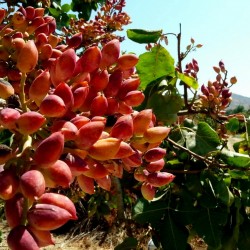
Pistacia atlantica is a species of pistachio tree known by the English common name Mt. Atlas mastic tree and as the Persian turpentine tree. In Iran it is called baneh.
Pistacia atlantica is a species of pistachio tree known by the English common name Mt. Atlas mastic tree and as the Persian turpentine tree. In Iran it is called baneh. In the Canary Islands it is known as Almacigo, and in Arabic, it is called بطم (buṭm or buṭum). In southern Iran, in Bandar-Abbas in Hormozgān Province it's called Kasoudang and in Bushehr it's called Kolkhong. In Turkey it is commonly known as Melengic
Overview
It is a tree of the genus Pistacia. It is a member of the same genus as pistachio, terebinth, and mastic. The Pistacia genus ranging from shrubs to trees adapted to drought and the Mediterranean climate.
It is stronger than Pistacia terebinthus by which it is used as rootstock in Ukraine and the United States for growing Pistacia vera, but resisting worst the frost that Pistacia terebinthus.
It is important its value against soil erosion. It strengthens the soil, is used for afforestation of arid and steep slopes and against landslides. It is a typical urban street trees in the Black Sea cities. In addition, Pistacia atlantica communities are a great refuge of rare species including many rare endemic in the Mediterranean.
The seeds, like pistachio, are edible oil seeds, such as nuts, and contain up to 60% fat. Candy made with Pistacia atlantica in Turkish are called tsukpi pistachio. Sometimes, the immature fruit is harvested and eaten with sour milk. The plant contains a rubber, used as chewing gum in Kevan, Turkey, where it is called kevove rubber tree.
The resin is used to manufacture alcohol and lacquer. Contains essential oils used in perfume industry. The leaves are rich in tannins, up to 20% in the galls caused by an aphid parasite. Are the raw material for tanning in the leather industry. The sap is dried and used as incense, and its combustion gives a pleasant smell, is used to give the local environment, celebrations and religious ceremonies known as "incense".
Description
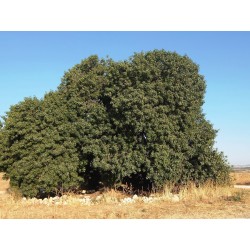
Pistacia atlantica is a deciduous tree growing up to 7 m (23 ft) tall with branches spreading and growing erect to form a dense crown. The trunk is stout and covered in fissured bark. Old trees may have trunks measuring 2 m (6 ft 7 in) in diameter; it may take 200 years for a tree to reach 1 m (3 ft 3 in) wide.[2] The leaves are pinnate, each with 7 to 9 lance-shaped leaflets.
The leaves and branches often have galls when the tree is infested with gall-producing species of aphids, including Pemphigus utricularis,[3] Slavum wertheimae, and Forda riccobonii.[4]
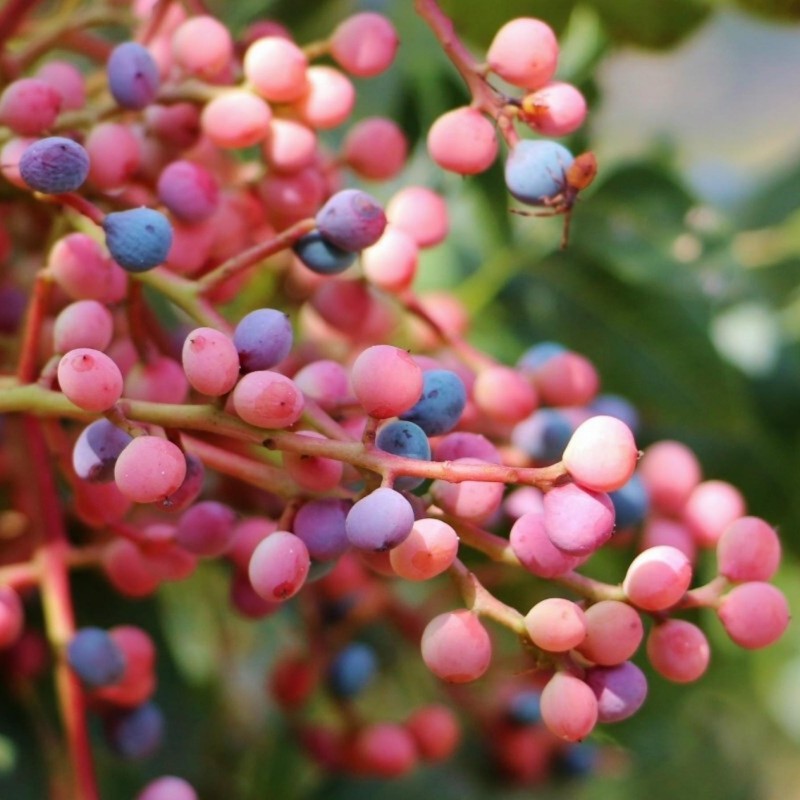
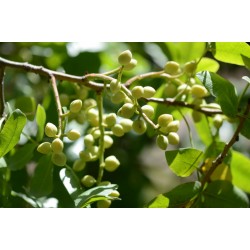
The tree is dioecious with male and female trees producing different types of flowers. Both types are small and greenish and fall away quickly. Monoecious and hermaphrodite trees have been seen but are unusual.[5] The oblong, fleshy, oily fruit borne by the female tree is 6 to 8 mm (0.24 to 0.31 in) long and pink in color, ripening blue. A tree that can reach 8 to 12 m tall, similar to ash or carob, the trunk diameter reaches 1 m at the two hundred years. It grow slowly reaching 1000 years old. His treetop is thick and tangled, it have broken bark with ashen gray color. Older branches have the same design, fractured and ash color, which gives the tree looked very old. Leaves oval, almost sessile, shining above, dark green, 7-9 leaflets, imparipinnate with petioles a little winged, flowers in racemes lax, the male and female on different trees. The flowers are unisexual, small, discreet green, thick as pea fruit, then changing to reddish blue.[6] In colder areas the leaves in May check and fall in November. Dioecious plants, in some communities dominate the female specimens. It grows in oak woodlands and oak sclerophyllous. The fruits ripen from July to October, starting to bear fruit at the age of 8–10 years, abundant fruit in 2–3 years.
Distribution
It is native to a section of Eurasia from the Iranian plateau to North Africa where it was once common. Because other trees were rare it was the only good source of wood and was overharvested, reducing its current distribution. It is a common tree in mountain forests in Iran, and it is "characteristic" of the landscape in parts of Algeria outside the Saharan desert.
The Almacigo is a tree that extends from the North Africa and found in thermophilous forests, up to 600 m altitude. It is one of the few deciduous species native to the Canary archipelago. It is native of Eurasia, the Iranian Plateau, to northern Africa. It is a common tree in the forests of the mountains of Iran. Also in the North of Sahara, in the region of the dayas at the foot of Atlas Moroccan and Algerian Sahara, is rare in the solid Hoggar. Northwest Morocco and Canary Islands, where it is protected by the "Annex II of the Order of the regional legislation Flora of the Canary Islands." Is found in all the Canary Islands under La Palma and El Hierro. In Gran Canaria form monospecific thickets in several western cliffs of the island, where it tends to hold the funds and the wetter areas, among Agaete and San Nicolas de Tolentino.
Uses
There are many uses for this plant. This wild pistachio is the most economically important tree in many parts of Iran, including the Zagros Mountains, where it is managed as a valuable forest tree. The resin and fruit oil were historically used for a variety of medicinal purposes.[3] The resin, known in Iran as saqez, is still an important commodity.
The tannins from the galls were used for tanning. The pistachio fruits are a food source in the area, but the more commonly cultivated pistachio tree Pistacia vera is more valuable for food production. The raw fruits of the wild pistachio are not favored as food and are said to taste like turpentine. They are about 45% oil.
Cultivation
Pistacia atlantica is planted as an ornamental shadebearing and drought tolerant landscape tree in gardens and parks. In California it is imported to use as rootstock for cultivated pistachio trees (Pistacia vera). Both introductions have led to its escape and current status as an occasional invasive species in California.
|
Sowing Instructions |
|
|
Propagation: |
Seeds |
|
Pretreat: |
soak in warm water for 24 hours |
|
Stratification: |
0 |
|
Sowing Time: |
all year round |
|
Sowing Depth: |
1 cm |
|
Sowing Mix: |
Coir or sowing mix + sand or perlite |
|
Germination temperature: |
20-25°C |
|
Location: |
bright + keep constantly moist not wet |
|
Germination Time: |
3-6 weeks |
|
Watering: |
Water regularly during the growing season |
|
|
|
Fisa tehnica
 Reviews (0)
Pistacia atlantica is a species of pistachio tree known by the English common name Mt. Atlas mastic tree and as the Persian turpentine tree. In Iran it is called baneh.