- +00 123 4567
- support@seeds-gallery.shop
over 2000 different plant seeds
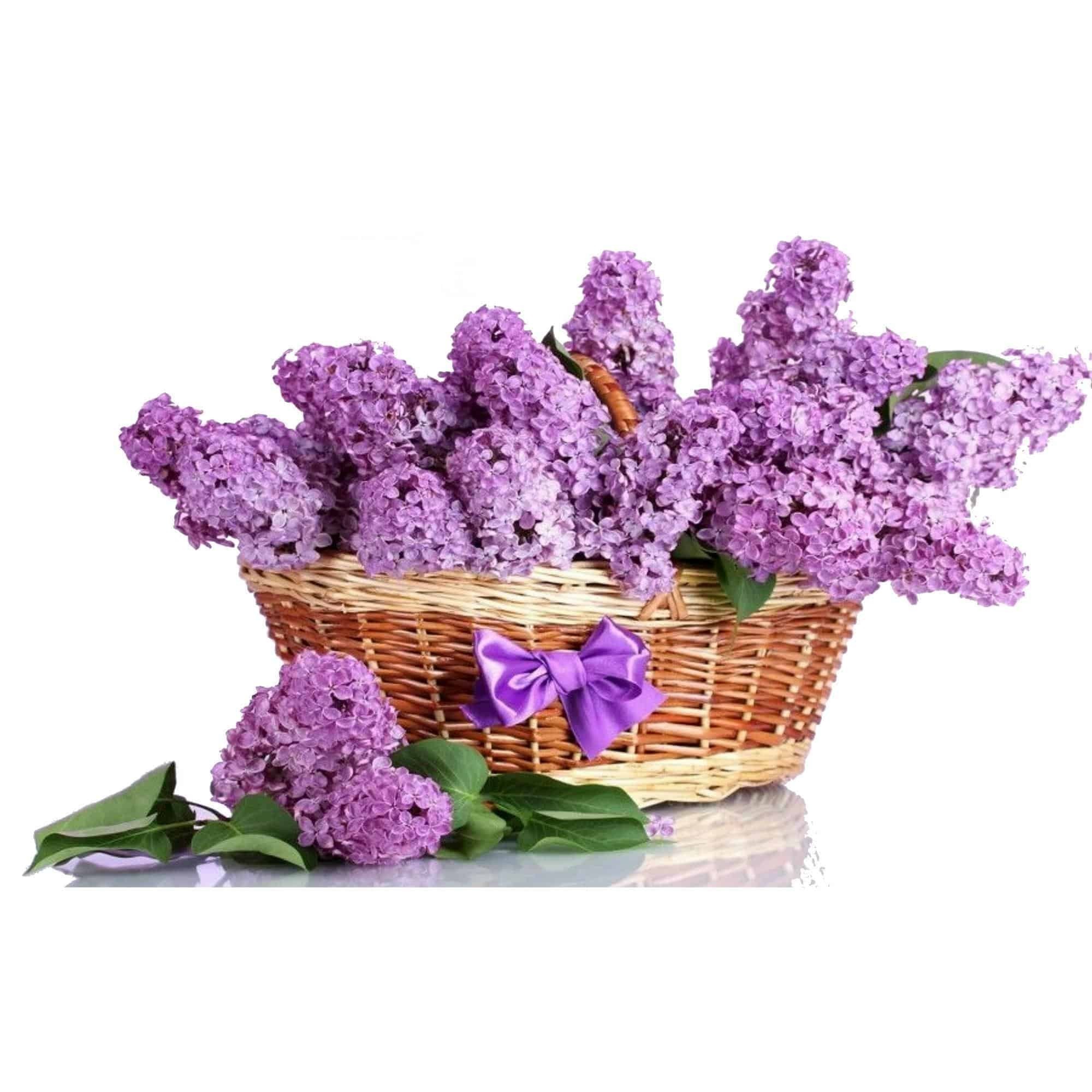


Syringa vulgaris originates from Europe. Great bonsai tree potential. If left to grow naturally, it reaches 8 to 10 feet tall. A small tree that with age develops deeply furrowed bark. This species of Lilac produces
Beste klanten,
Wij willen u informeren over een belangrijke wijziging met betrekking tot de betalingskosten. Helaas zijn wij, vanwege de extreem hoge transactiekosten die door PayPal worden opgelegd, genoodzaakt een toeslag te rekenen voor betalingen via deze service.
Gelukkig hebben wij een oplossing voor u! U kunt deze astronomische kosten vermijden door te kiezen voor een van onze alternatieve betaalmethoden ZONDER COMMISSIE:
✅ Betaling per bankkaart (Creditcard/Debetkaart) – 0% commissie ✅ Bankoverschrijving – 0% commissie
Om van deze besparing te profiteren, verzoeken wij u om uw aankoop rechtstreeks via onze officiële website te voltooien: 👉
Bedankt voor uw begrip en voor het kiezen van onze zaden!
Het Seeds Gallery-team
Syringa vulgaris originates from Europe. Great bonsai tree potential. If left to grow naturally, it reaches 8 to 10 feet tall. A small tree that with age develops deeply furrowed bark. This species of Lilac produces suckers new shoots that sprout from the base of the shrub, or from the roots. Is very tolerant of hard pruning necessary for bonsai cultivation. Green heart-shaped leaves are smooth and appear before the flowers bloom. At Fall, the leaves turn yellow-green. The light purple flowers grow in large clusters, from May to June and have one of the most powerful fragrances emitted by a plant. Hardiness zones 3-7, (-15ºC/5ºF, -37ºC/-35ºF) in Winter. Adptable to a wide range of soils. Lilacs prefer well-drained, slightly alkaline soil and plenty of sunshine for optimum growth and blooming. Although Lilacs love water, they don't enjoy soggy soil. Without proper drainage, Lilacs will do little growing and produce fewer blossoms.
Germination
For faster germination, soak the seeds in slightly hot water for 24-48 hours, followed by one month of cold stratification before sowing at 1/4" deep in sterile gardening soil. Keep damp soil, not soaking wet. Keep pot in warm situation 68-75ºF. Germination usually occurs in 2-4 weeks. It can be a lot more depending on their degree of unbroken dormancy, don't give up.
Scarification / Stratification
This will break their dormancy. It creates a cold and moist environment for the seeds. Mixed in seeds with slightly moistened vermiculite or peat, only damp in a ziplock bag. Close zip bag shut and store it in the salad crisper compartment of your refrigerator. If any seeds begin to sprout during the cold stratification, simply remove the seed and plant.
WIKIPEDIA:
Syringa vulgaris (lilac or common lilac) is a species of flowering plant in the olive family Oleaceae, native to the Balkan Peninsula, where it grows on rocky hills. This species is widely cultivated as an ornamental and has been naturalized in other parts of Europe (UK, France, Germany, Italy, etc.), as well as much of North America. It is not regarded as an aggressive species, found in the wild in widely scattered sites, usually in the vicinity of past or present human habitations.
S. vulgaris is a large deciduous shrub or multistemmed small tree, growing to 6–7 m (20–23 ft) high, producing secondary shoots ("suckers") from the base or roots, with stem diameters up to 20 cm (8 in), which in the course of decades may produce a small clonal thicket.[7] The bark is grey to grey-brown, smooth on young stems, longitudinally furrowed, and flaking on older stems. The leaves are simple, 4–12 cm (2–5 in) and 3–8 cm broad, light green to glaucous, oval to cordate, with pinnate leaf venation, a mucronate apex, and an entire margin. They are arranged in opposite pairs or occasionally in whorls of three. The flowers have a tubular base to the corolla 6–10 mm long with an open four-lobed apex 5–8 mm across, usually lilac to mauve, occasionally white. They are arranged in dense, terminal panicles 8–18 cm (3–7 in) long. The fruit is a dry, smooth, brown capsule, 1–2 cm long, splitting in two to release the two-winged seeds.
Garden history
Lilacs — both S. vulgaris and S. × persica the finer, smaller "Persian lilac", now considered a natural hybrid — were introduced into European gardens at the end of the 16th century, from Ottoman gardens, not through botanists exploring the Balkan habitats of S. vulgaris.[12] The Holy Roman Emperor's ambassador, Ogier Ghiselin de Busbecq, is generally credited with supplying lilac slips to Carolus Clusius, about 1562. Well-connected botanists, such as the great herbalist John Gerard, soon had the rarity in their gardens: Gerard noted that he had lilacs growing “in very great plenty” in 1597, but lilacs were not mentioned by Shakespeare,[13] and John Loudon was of the opinion that the Persian lilac had been introduced into English gardens by John Tradescant the elder.[14] Tradescant's Continental source for information on the lilac, and perhaps ultimately for the plants, was Pietro Andrea Mattioli, as one can tell from a unique copy of Tradescant's plant list in his Lambeth garden, an adjunct of his Musaeum Tradescantianum; it was printed, though probably not published, in 1634: it lists Lilac Matthioli. That Tradescant's "lilac of Mattioli's" was a white one is shown by Elias Ashmole's manuscript list, Trees found in Mrs Tredescants Ground when it came into my possession (1662):[15] "Syringa alba".
In the American colonies, lilacs were introduced in the 18th century. Peter Collinson, F.R.S., wrote to the Pennsylvania gardener and botanist John Bartram, proposing to send him some, and remarked that John Custis of Virginia had a fine "collection", which Ann Leighton interpreted as signifying common and Persian lilacs, in both purple and white, "the entire range of lilacs possible" at the time.
Cultivation
The lilac is a very popular ornamental plant in gardens and parks, because of its attractive, sweet-smelling flowers, which appear in early summer just before many of the roses and other summer flowers come into bloom.
In late summer, lilacs can be attacked by powdery mildew, specifically Erysiphe syringae, one of the Erysiphaceae.[18] No fall color is seen and the seed clusters have no aesthetic appeal.
Common lilac tends to flower profusely in alternate years, a habit that can be improved by deadheading the flower clusters after the color has faded and before seeds, few of which are fertile, form. At the same time, twiggy growth on shoots that have flowered more than once or twice can be cut to a strong, outward-growing side shoot.
It is widely naturalised in western and northern Europe.[8] In a sign of its complete naturalization in North America, it has been selected as the state flower of the state of New Hampshire, because it "is symbolic of that hardy character of the men and women of the Granite State".[19] Additional hardiness, for Canadian gardens, was bred for in a series of S. vulgaris hybrids by Isabella Preston, who introduced many of the later-blooming varieties, whose later-developing flower buds are better protected from late spring frosts; the Syringa x prestoniae hybrids range primarily in the pink and lavender shades


Uw beoordelingswaardering kan niet worden verzonden
Rapporteer reactie
Melding verzonden
Uw opmerking kan niet worden verzonden
Schrijf uw recensie
Beoordeling verstuurd
Uw beoordeling kan niet worden verzonden
🌍 Wereldwijde verzending vanuit de EU
Wij verzenden wereldwijd vanuit de Europese Unie via aangetekende luchtpost met handtekening voor ontvangst bij levering.
📦 Uw bestelling volgen
Om uw trackingnummer te vinden, logt u in op uw account en gaat u naar: Bestelgeschiedenis > Details. Uw trackingnummer bevindt zich direct in de bestelgegevens.
U ontvangt e-mailmeldingen voor elke fase van uw bestelling.
Als u deze berichten niet ziet, controleer dan uw map Spam/Ongewenste e-mail of neem contact op met uw e-mailprovider. Zoek anders online naar hoe u e-mails van afzenders kunt deblokkeren.
ONZE E-MAILSERVICE WERKT — Als u geen e-mails ontvangt, ligt dit waarschijnlijk aan uw e-mailprovider of instellingen.
📧 Hoe u ervoor zorgt dat e-mails van onze webshop altijd in uw inbox terechtkomen
Om te voorkomen dat onze e-mails als spam worden gemarkeerd, voegt u ons e-mailadres toe aan uw contacten:
Open Gmail (of een andere provider) en zoek een e-mail van ons (support@seeds-gallery.shop).
Beweeg de muis over de naam of het e-mailadres van de afzender.
Klik op het icoon "Toevoegen aan contacten" (het poppetje).
We kunnen u niet helpen als uw instellingen niet zo staan. Neem contact op met uw e-mailprovider voor hulp.
Als alternatief kunt u een filter maken in Gmail:
Open Gmail en ga naar Instellingen > Alle instellingen bekijken.
Ga naar het tabblad Filters en geblokkeerde adressen.
Klik op Nieuw filter maken en voer ons e-mailadres in.
Vink Nooit naar Spam verzenden aan en klik op Filter maken.
📍 Uw pakket volgen
Uw trackingnummer staat in uw bestelgegevens. U kunt uw bestelling volgen via de volgende platforms:
⚠️ Belangrijke mededelingen
Betaling onder rembours is NIET mogelijk.
Geef bij het bestellen altijd een geldig mobiel nummer op met landnummer (bijv. +31 6 1234 5678).
Bestel NIET naar postbussen (P.O. Boxes) of als u niet thuis kunt zijn om voor het pakket te tekenen. Pakketten kunnen niet bij de buren worden afgegeven.
Als een pakket dat naar een postbus is verzonden verloren gaat of niet wordt bezorgd, vindt er geen terugbetaling plaats.
⚖️ Verantwoordelijkheid van de klant voor wettelijke naleving
De klant is verantwoordelijk om ervoor te zorgen dat het product legaal in zijn land mag worden geïmporteerd, inclusief naleving van alle importvoorschriften, het verkrijgen van de nodige vergunningen en de betaling van toepasselijke douanerechten, belastingen en andere kosten. Controleer uw lokale wetgeving voordat u bestelt.
🔄 Verloren, geretourneerde en opnieuw verzonden pakketten
Klanten uit Brazilië en Mexico: We kunnen geen pakketten terugbetalen die door de douane zijn verloren of vernietigd.
Als uw pakket wordt geretourneerd, betalen we alleen de productkosten terug — verzendkosten worden niet gerestitueerd.
Retourkosten (€2) en eventuele kosten voor opnieuw verzenden zijn voor rekening van de klant.
🚚 Levering van de zending
Aangetekende zendingen vereisen een handtekening.
Als de tracking aangeeft dat het pakket nog op het postkantoor van herkomst is, is het onderweg — neem contact op met uw lokale postkantoor voor updates.
Helaas kunnen wij, noch het postkantoor waardoor uw bestelling is verzonden, u helpen met de vraag waar uw bestelling zich precies bevindt. Wanneer u ziet dat het pakket in uw land is, MOET u contact opnemen met uw postkantoor met het trackingnummer.
⏱️ Leveringsopties & geschatte tijden
| Leveringsoptie | Verwerkingstijd | Opmerkingen |
| Priority Delivery | Verzonden binnen 1–7 werkdagen | Prioriteit bij orderverwerking; vertragingen mogelijk tijdens feestdagen (3–10 dagen) |
| Secured Delivery | Verzonden binnen 1–7 werkdagen | Beschikbaar voor bestellingen tot €150; terugbetaling bij verlies |
| Standard Delivery | Verzonden binnen 7–10 werkdagen | Voordeliger; vertragingen mogelijk tijdens feestdagen (7–14 dagen) |
Geschatte levertijden:
Binnen de EU: 3–20 dagen
Wereldwijd: 5–30 dagen
Opmerking: Levertijden zijn afhankelijk van uw locatie en het lokale postsysteem. COVID-19 of feestdagen kunnen extra vertraging veroorzaken.
💰 Verzendkosten
Verzend- en administratiekosten worden automatisch berekend bij het afrekenen op basis van het gewicht van het pakket en de bestemming.
⏰ Verwerkingstijden
Wij verwerken of verzenden geen bestellingen op zaterdag of zondag.
💳 Betalingsmogelijkheden
Wij willen u informeren over een belangrijke wijziging met betrekking tot de betalingskosten. Helaas zijn wij, vanwege de uitzonderlijk hoge transactiekosten die PayPal in rekening brengt, genoodzaakt een toeslag toe te passen voor betalingen die via hun service worden gedaan.
We hebben echter een oplossing voor u! U kunt deze astronomische kosten vermijden door te kiezen voor een van onze alternatieve betaalmethoden met NUL COMMISSIE:
✅ Creditcard/Betaalpas betaling – 0% Kosten
✅ Bankoverschrijving – 0% Kosten
Bankoverschrijving (SEPA / IBAN / SWIFT-BIC): Vermeld uw bestelreferentie in de betalingsomschrijving. Bestellingen zonder betaling binnen 4 dagen worden automatisch geannuleerd.
PayPal: Betalingen worden alleen in Euro geaccepteerd. Selecteer Euro tijdens het afrekenen.
Kaartbetaling: Ga voor kaartbetalingen naar onze partnerwebsite:
Wij accepteren Visa, MasterCard, American Express, CB, Diners Club, Discover, China UnionPay, JCB en Discover.
⚠️ Transactiekosten
Klanten zijn verantwoordelijk voor eventuele bank- of PayPal-transactiekosten.
📝 Slotopmerkingen
Controleer voor het plaatsen van uw bestelling altijd onze website voor speciale mededelingen, vakantieschema's of specifieke verzendvoorwaarden.
check_circle
check_circle